
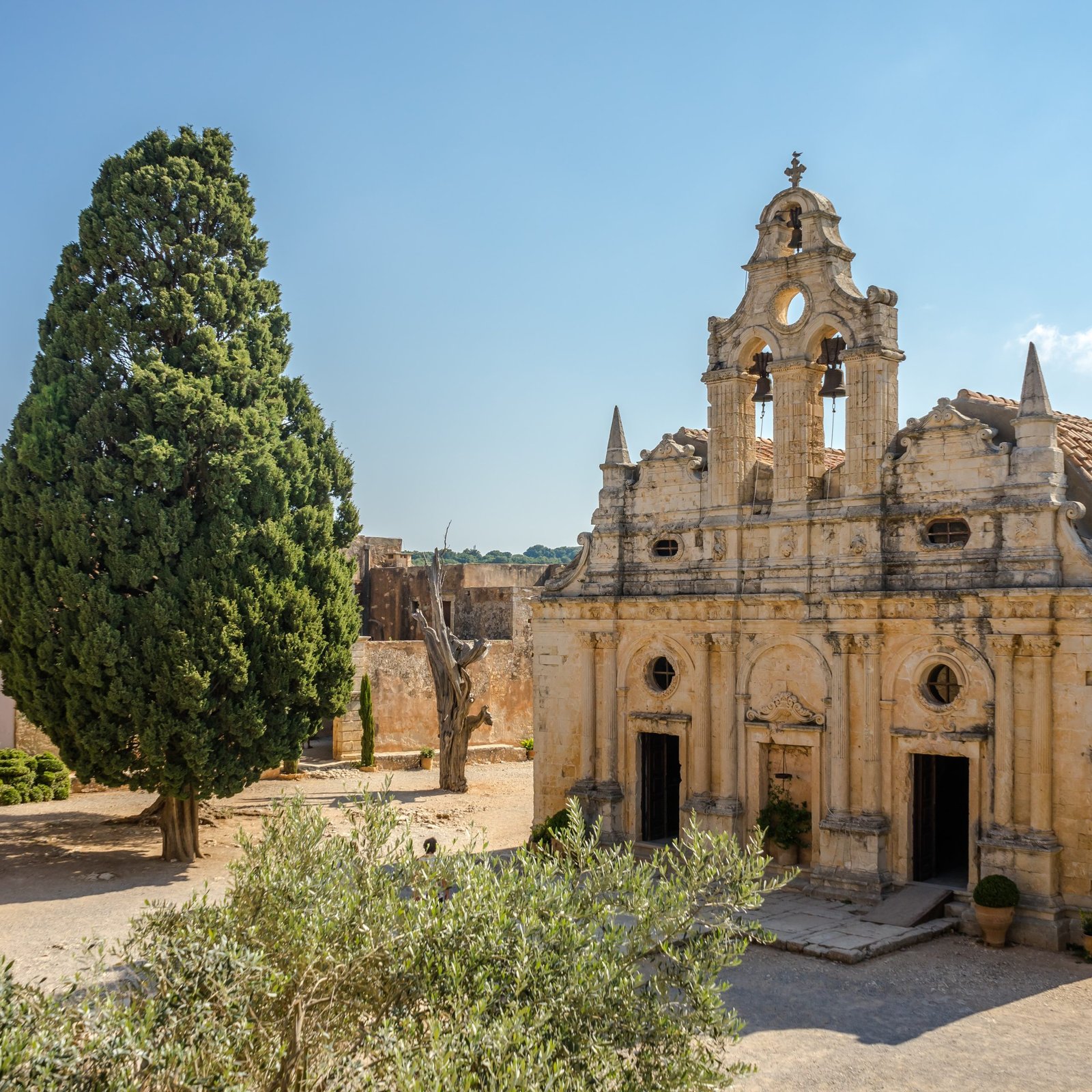
Moni Arkadiou, also known as Arkadi Monastery, sits in the hills of Crete, about 23 kilometers southeast of Rethymno and stands at 500 meters above sea level. Vineyards, olive groves, and pine forests surround it. The monastery holds deep historical and cultural value.
Moni Arkadiou is most famous for its role in the 1866 Cretan revolt against Ottoman rule. Almost 1,000 people, mostly women and children, sought shelter in the monastery. After a two-day siege, they faced capture. But instead of surrendering, the defenders ignited the gunpowder stores. The massive explosion killed many, including attackers. This act became a powerful symbol of freedom and sacrifice. Each year, Crete honors their memory on November 8th.
Visitors can explore the church, refectory, and surrounding buildings. The refectory walls still show bullet holes and sword marks. Moreover, the powder magazine, where the explosion occurred, is open to view. Outside, a memorial displays the skulls of those who died in the blast. This display is somber but meaningful.
Getting to Moni Arkadiou is simple by car. Visitors just have to follow the signs from Rethymno. Furthermore, free parking is available on-site. The monastery stays open year-round. More specifically, summer hours run longer, while winter hours are shorter.
Visitors should dress modestly. The monastery remains an active religious site. However, women should wear long skirts, and men should avoid sleeveless tops. Staff may offer cover-ups if needed.

Comment (0)